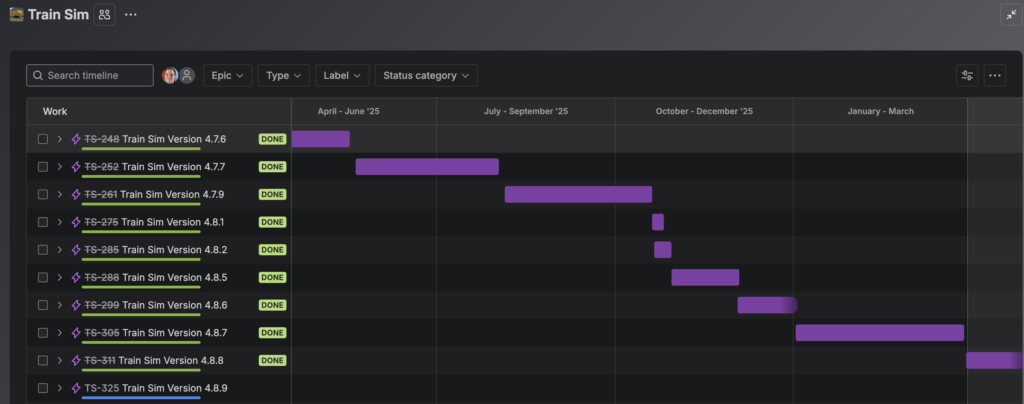
Over the last year, Train Sim had 9 official releases, along with a steady stream of beta updates and behind-the-scenes work.
A release can make development look simple: add a feature, publish a version, move on to the next one. The reality is messier-and, I think, more interesting. Keeping an indie game moving forward means balancing new content with bug fixes, technical cleanup, platform work, and all the small improvements that make the game feel better over time.
The year in numbers
During the past year, Train Sim development included:
- 9 official releases
- 126 commits
- More than 700 file changes
- More than 100,000 lines changed
Those numbers do not tell the whole story, but they do show that a live game is never just “finished.” Even a small update can touch menus, game systems, visuals, testing, store builds, and fixes for issues players may never see.
What players saw
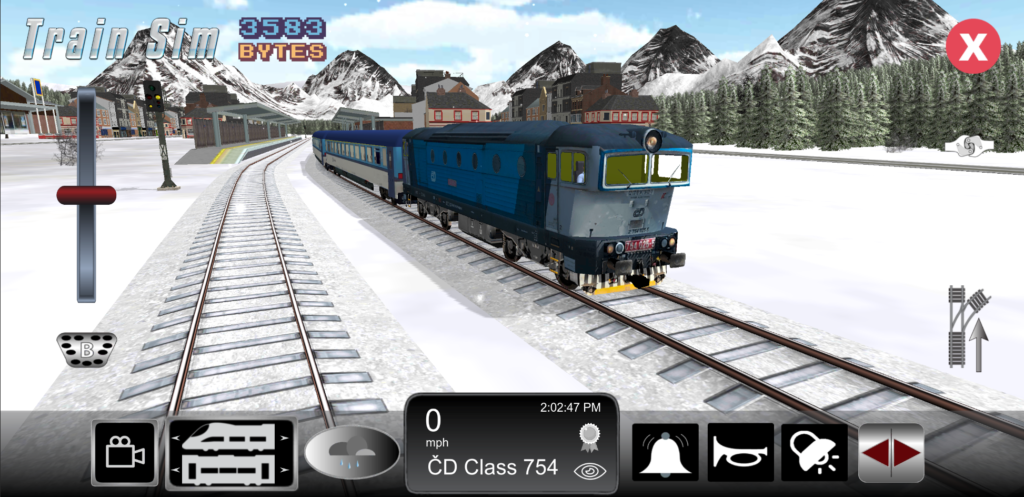
The visible part of the year included new locomotives such as the ČSD Class 754, British Class 360, and Peckett 0-4-0ST, plus a new Austria–Czech Republic themed level.
There were also larger improvements to how the game works: multiplayer leaderboards, train filtering, vehicle crashes, better track switching, and updates to steam effects and the interface.
Those are the changes that are easiest to point to, because they give players something new to explore or make an existing part of the game more enjoyable.
What players may not notice-but still benefit from
A large share of development was less visible. That included bug fixes, refactoring, Creative Mode improvements, build and platform work, and general cleanup across the project.
This work is easy to underestimate because it rarely makes for a dramatic screenshot. But it is what helps a game stay stable as new features are added. It reduces the chance that one improvement creates three new problems elsewhere, and it gives future updates a healthier foundation to build on.
For a long-running game, that maintenance is not separate from development. It is development.
Building around the rest of life
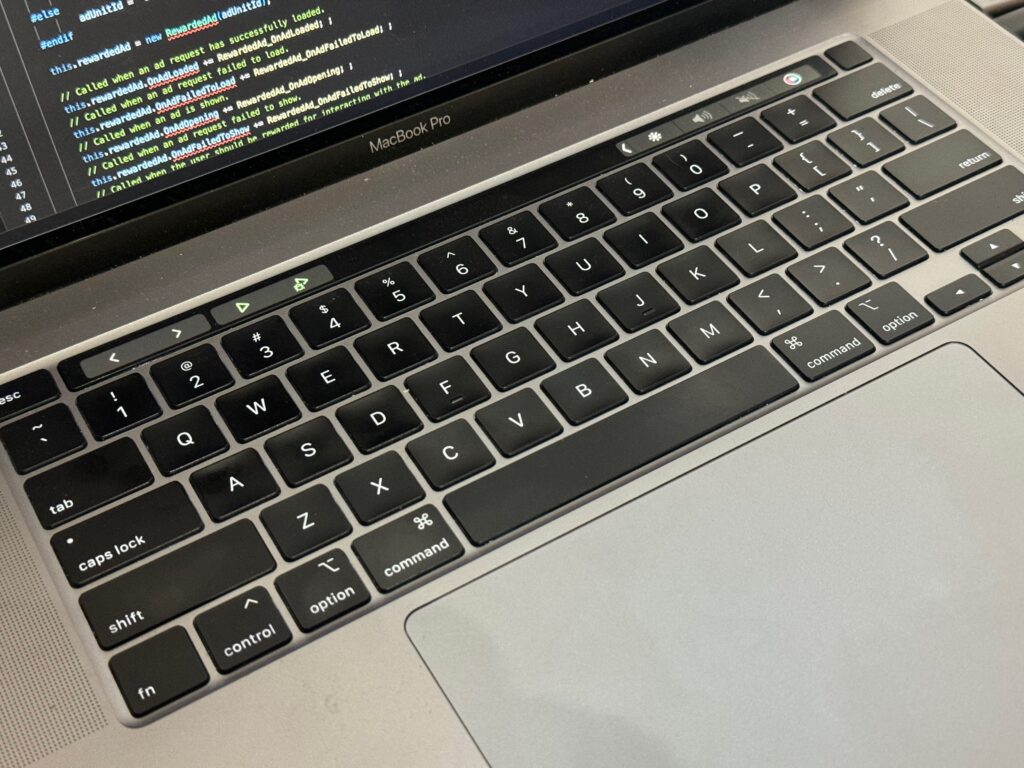
Train Sim is not made by a large studio with a full team and uninterrupted workdays. I build it alongside a full-time job and family life, often in the ordinary gaps around everything else-an evening with my MacBook open while the TV is on and the house is still busy
That means progress is rarely dramatic. More often, it is a feature completed in pieces, a bug narrowed down after several evenings, or a release assembled from many small changes that gradually became a meaningful update
Over a year, those small steps added up to nine releases and a much stronger version of the game.
Looking ahead
The most useful lesson from this year has been that an indie game does not need constant giant updates to keep improving. New trains and levels matter, but so do smoother systems, fewer bugs, clearer menus, and the unglamorous technical work that keeps everything moving.
That is what this year of Train Sim development really looked like: new content, maintenance, experimentation, fixes, and a lot of small decisions adding up over time.
If you have played Train Sim, thank you for being part of that process. I’m looking forward to continuing to build on it.
If you’d like to see the result of all that work, you can download Train Sim here: