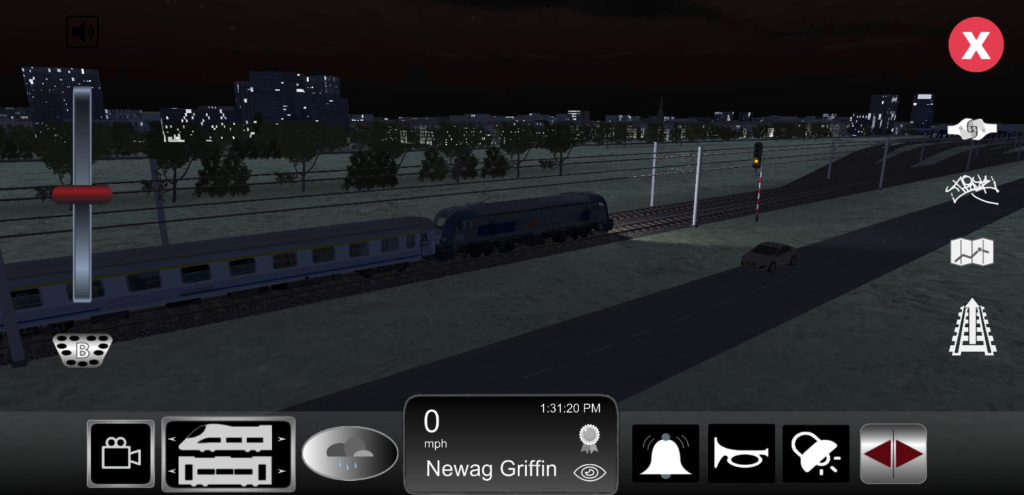
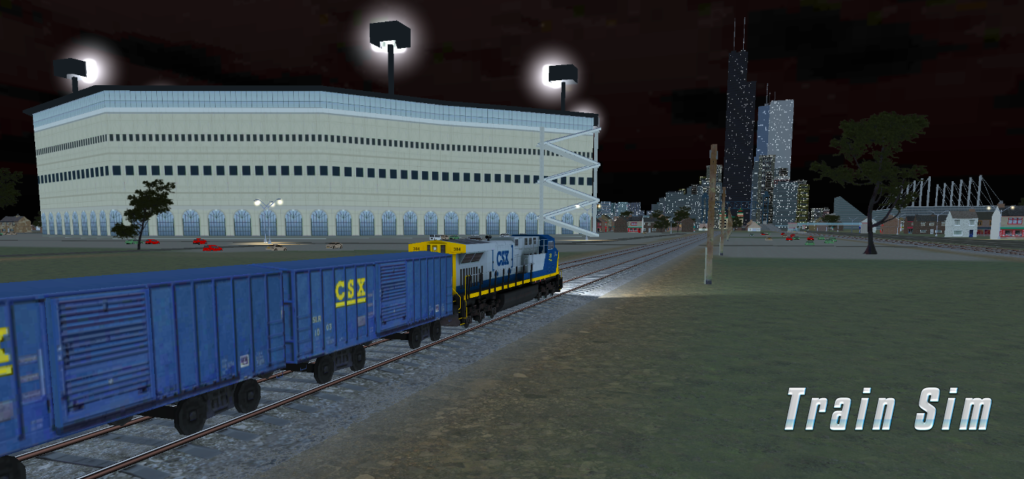
Cities in Train Sim are getting a small but exciting visual upgrade!
The windows in city buildings now light up at night, adding a little more life and atmosphere to nighttime drives. Previously, the windows stayed dark, so this is a small change that makes the world feel a bit more alive.
Want to try it out? This feature is now available in the open beta!
Our next level takes you somewhere new: the working heart of a big American rail city. Port City is inspired by Chicago’s South Side freight lines. The route was laid out from real map data, so the curves, junctions and landmarks follow the real geography, from the downtown skyline all the way to the docks on the Calumet River.
What you’ll find along the line:
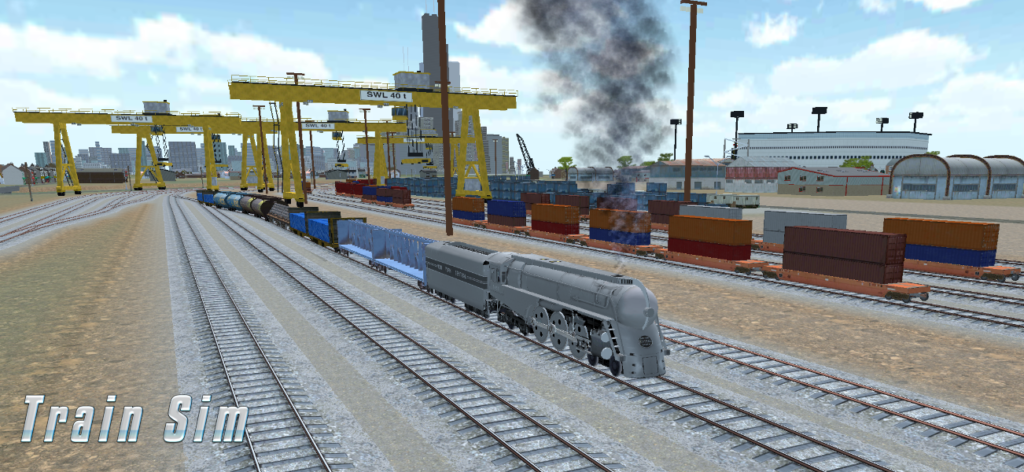
Three busy freight yards: roll past long cuts of parked freight cars, giant gantry cranes stacking containers, and a hump control tower you drive straight underneath. Several yard tracks are drivable, so you can leave the main line and explore.
A working port: cargo ships at the quay, a towering grain elevator, bulk material piles, a fabric storage shelter, and sidings you can drive right down to the water.
Bridges everywhere: cross the river on lift bridges and pass beneath the soaring Skyway bridge high overhead.
City landmarks: a big-league ballpark you circle on your way through, the lakefront football stadium, and the historic Pullman district with its clock tower, grand hotel and red brick church.
A living city: an elevated rapid-transit line runs beside you with its own trains stopping at stations, and on the opposite track oncoming trains pass in the other direction.
We can’t wait for you to take the throttle. Port City arrives in an upcoming update. Stay tuned!
Train Sim is now available on Steam for Windows PC.
After years of building Train Sim for mobile players, you can now experience the game on PC -with 80+ trains, 16 environments, Creative Mode, and more.
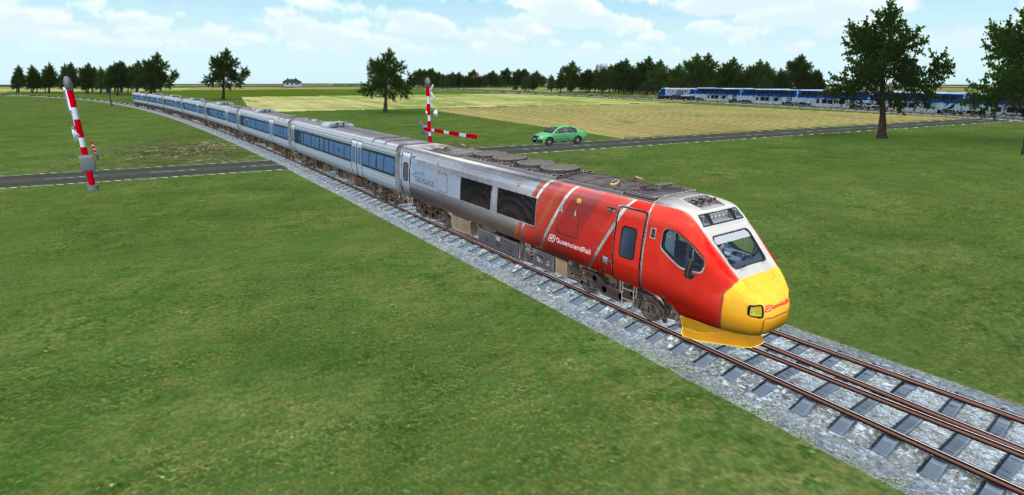
Drive steam, diesel, electric, passenger, freight, subway, and high-speed trains. Explore hand-built environments, switch between different weather and times of day, operate passenger and freight trains, or simply sit back and watch the trains go by.
And if you’d rather build than drive, Creative Mode lets you create your own railway environments.
A train game you can enjoy at your own pace
Train Sim has always been about giving players the freedom to enjoy trains their own way. Now that experience is available on Steam too.
Thank you to everyone who has played Train Sim over the years and helped us get here. What started as a small project has grown into a game played by millions of people around the world – and we’re still adding to it.
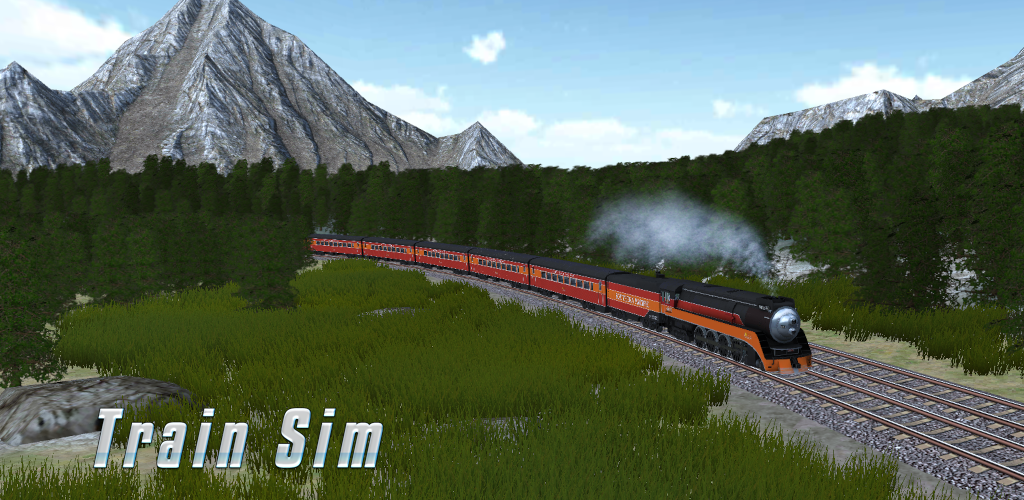
Train Sim is a relaxing 3D train simulator built for players who enjoy driving trains, exploring detailed environments, and creating their own railway layouts. With more than 80 trains from around the world, 16 environments, passenger and freight gameplay, cab views, weather options, and Creative Mode, there is always another route to explore.
For more than a decade, Train Sim has grown through steady updates and player feedback. Bringing it to Steam is an exciting next step, and we look forward to sharing more news as development continues.
Add Train Sim to your Steam wishlist to follow the journey and be ready when it arrives.
Right now, TrainSim’s achievements are all-or-nothing. You either have “Crash 10 Passenger Trains” or you don’t, with no way to know if you’re 1 crash in or 9. Same story for the longer ones like Subway Surfer (10 stations), Back Couple Master (25 trains), Mission Master (30 missions), and so on. You’re just guessing.
The next update changes that. Every multi-step achievement now reports progress as you play. When you make progress, a popup appears showing where you are, like “Progress 3 of 10: Passenger Crasher”, using the same notification style you’re used to, just with a gray trophy instead of gold so it’s clear you haven’t earned it yet.
The achievement screen also gets an update. Every unearned achievement that has measurable progress shows a [current/max] bracket next to its description, so you can scroll through and instantly see which ones you’re close to finishing.
It’s a small change, but it makes the achievement system feel a lot more honest about what you’ve done and what’s left.
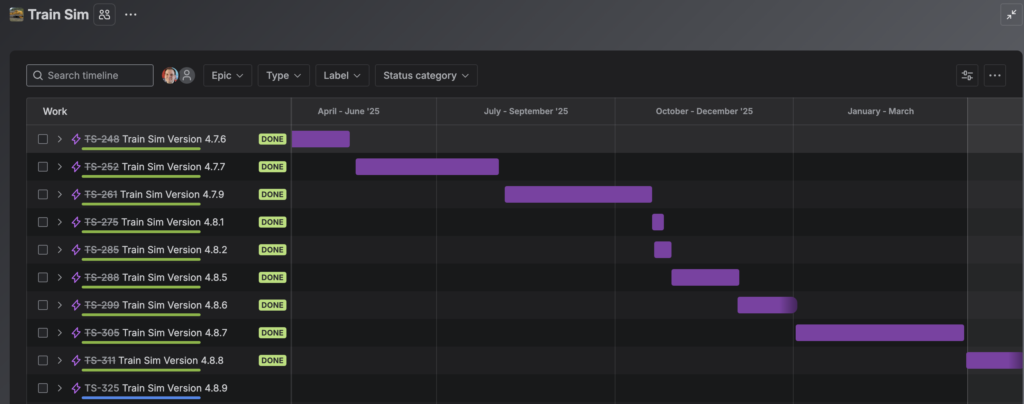
Over the last year, Train Sim had 9 official releases, along with a steady stream of beta updates and behind-the-scenes work.
A release can make development look simple: add a feature, publish a version, move on to the next one. The reality is messier-and, I think, more interesting. Keeping an indie game moving forward means balancing new content with bug fixes, technical cleanup, platform work, and all the small improvements that make the game feel better over time.
The year in numbers
During the past year, Train Sim development included:
9 official releases
126 commits
More than 700 file changes
More than 100,000 lines changed
Those numbers do not tell the whole story, but they do show that a live game is never just “finished.” Even a small update can touch menus, game systems, visuals, testing, store builds, and fixes for issues players may never see.
What players saw
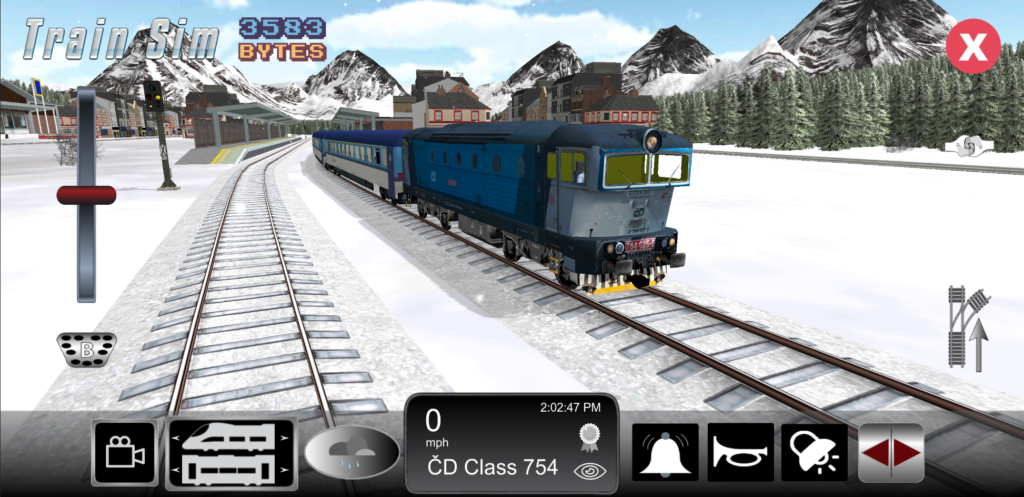
The visible part of the year included new locomotives such as the ČSD Class 754, British Class 360, and Peckett 0-4-0ST, plus a new Austria–Czech Republic themed level. There were also larger improvements to how the game works: multiplayer leaderboards, train filtering, vehicle crashes, better track switching, and updates to steam effects and the interface. Those are the changes that are easiest to point to, because they give players something new to explore or make an existing part of the game more enjoyable.
What players may not notice-but still benefit from
A large share of development was less visible. That included bug fixes, refactoring, Creative Mode improvements, build and platform work, and general cleanup across the project. This work is easy to underestimate because it rarely makes for a dramatic screenshot. But it is what helps a game stay stable as new features are added. It reduces the chance that one improvement creates three new problems elsewhere, and it gives future updates a healthier foundation to build on. For a long-running game, that maintenance is not separate from development. It is development.
Building around the rest of life
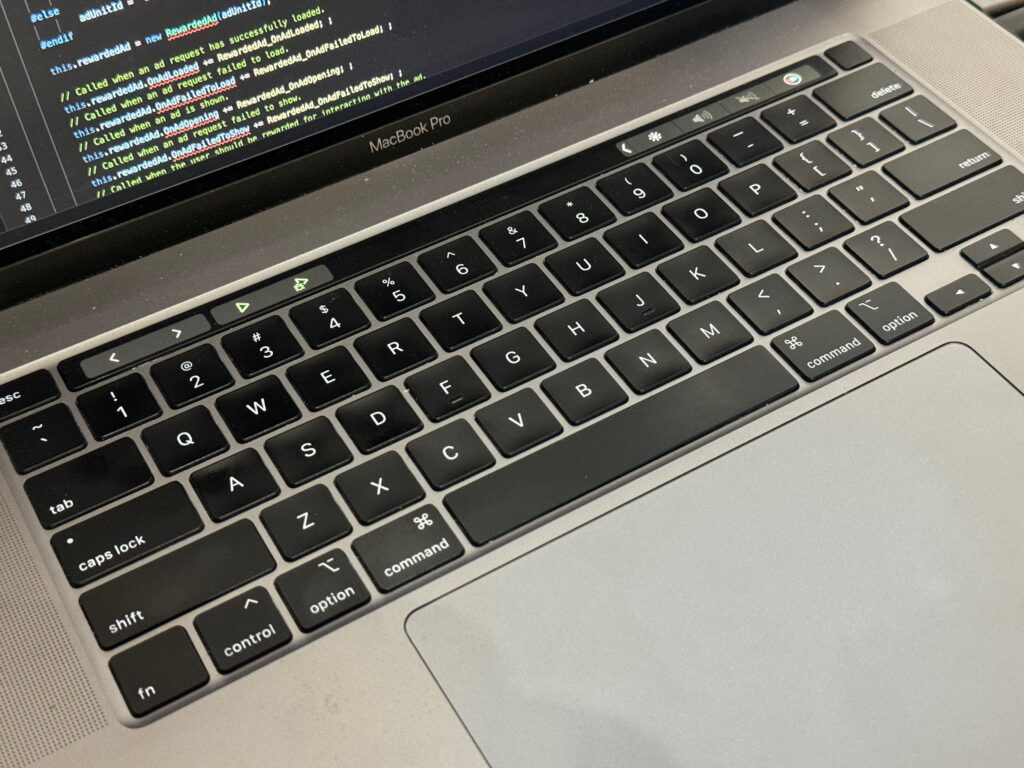
Train Sim is not made by a large studio with a full team and uninterrupted workdays. I build it alongside a full-time job and family life, often in the ordinary gaps around everything else-an evening with my MacBook open while the TV is on and the house is still busy That means progress is rarely dramatic. More often, it is a feature completed in pieces, a bug narrowed down after several evenings, or a release assembled from many small changes that gradually became a meaningful update
Over a year, those small steps added up to nine releases and a much stronger version of the game.
Looking ahead
The most useful lesson from this year has been that an indie game does not need constant giant updates to keep improving. New trains and levels matter, but so do smoother systems, fewer bugs, clearer menus, and the unglamorous technical work that keeps everything moving. That is what this year of Train Sim development really looked like: new content, maintenance, experimentation, fixes, and a lot of small decisions adding up over time.
If you have played Train Sim, thank you for being part of that process. I’m looking forward to continuing to build on it.
If you’d like to see the result of all that work, you can download Train Sim here:
We use cookies to ensure that we give you the best experience on our website. If you continue to use this site we will assume that you are happy with it.